


This article is an excerpt from the Summer 2026 Talcott Continuum newsletter. Read the full newsletter here.
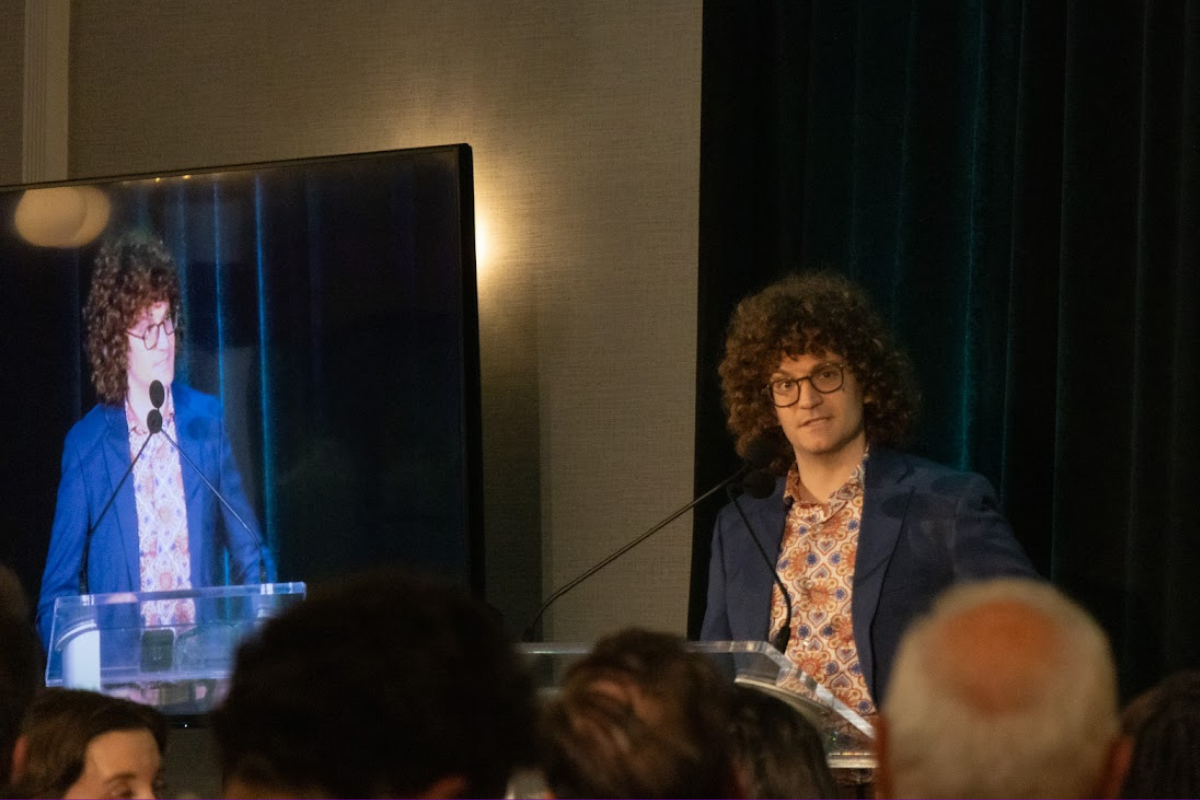
Bryce Adelstein Lelbach did not have a computer at home until he was 12 years old. Today, he is a Principal Software Engineer at NVIDIA and the recipient of Talcott Mountain Science Center, Academy, & Research Institute’s 2026 Young Alumni Innovator Award. For Bryce, the recognition is especially meaningful because Talcott was one of the few academic spaces where he felt encouraged to explore his interests.
“I’m of course very honored. Talcott’s always had a very special place in my heart,” Bryce says. “It’s very nice to be appreciated, especially as somebody who did not have a good experience with the educational system in general. I was a college dropout. I was not a very good student in high school and college. So it’s nice to be honored by the one academic institution that I have always had good feelings about.”
Bryce’s connection to Talcott began long before he enrolled in the Academy. He spent years attending Talcott’s summer programs before becoming an Academy student and graduating in 2005. Later, while in high school, he returned to the mountain as a summer program counselor. When he looks back on those years, Bryce does not remember the grades or assignments. Instead, he remembers learning how to ask questions.
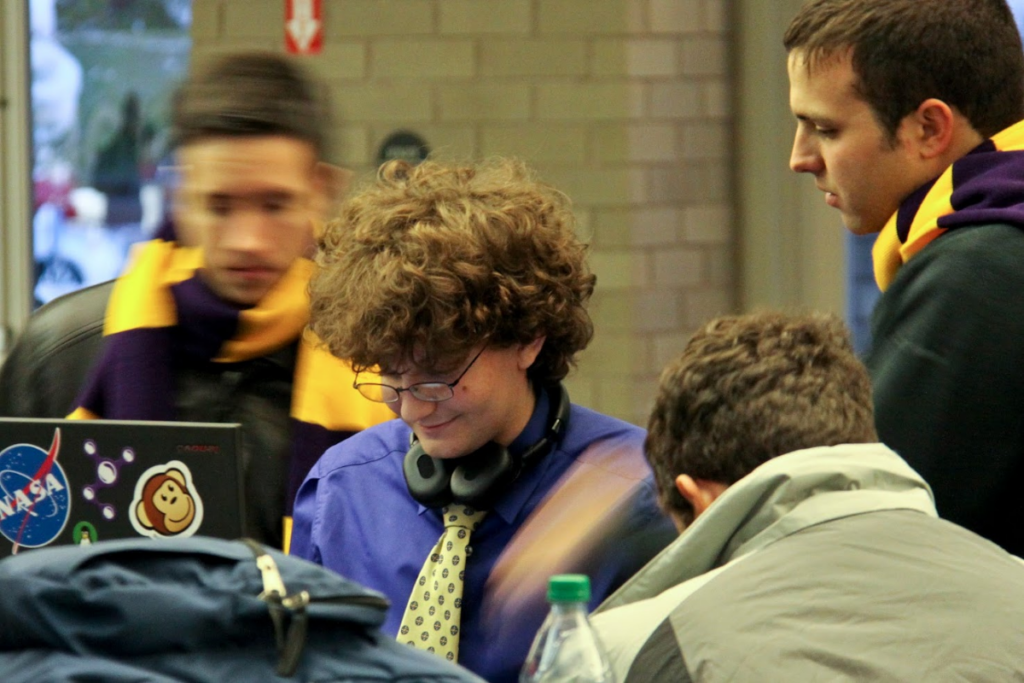
“Talcott’s the last place in traditional schooling where I learned anything,” Bryce shares. “What I learned from Talcott was how to learn, how to be a scientist, some of the basics of curiosity, the scientific methodology, and just the idea of exploration, of tackling hard, open questions.”
At Talcott, Bryce attended lectures, interacted with scientists, and explored ideas that interested him. He was encouraged to see himself not just as a student learning about science, but as someone capable of contributing to it. His time at Talcott also gave him something else: the confidence to believe he belonged in those spaces.
“I learned this confidence from being at Talcott, this confidence of being in the room with the notable leaders of any particular field,” he says. “When I was at Talcott, we would go to the On the Shoulders of Giants lectures, and we’d have all these prominent scientists and people come in. That normalized being in the room with leaders for me.”
After graduating from the Academy, Bryce followed a path that looked different from many of his peers. He left college during his freshman year and immersed himself in the world of open-source software, collaborating with developers from around the globe. This journey shaped his technical expertise and reinforced his belief in the value of community in personal and professional growth.
“When I was at Talcott, I felt respected by the teachers almost as a peer,” Bryce says. “I felt that I too could do science, could conduct an experiment, could maybe even teach the teachers something. That’s a very rare thing in our educational system.”
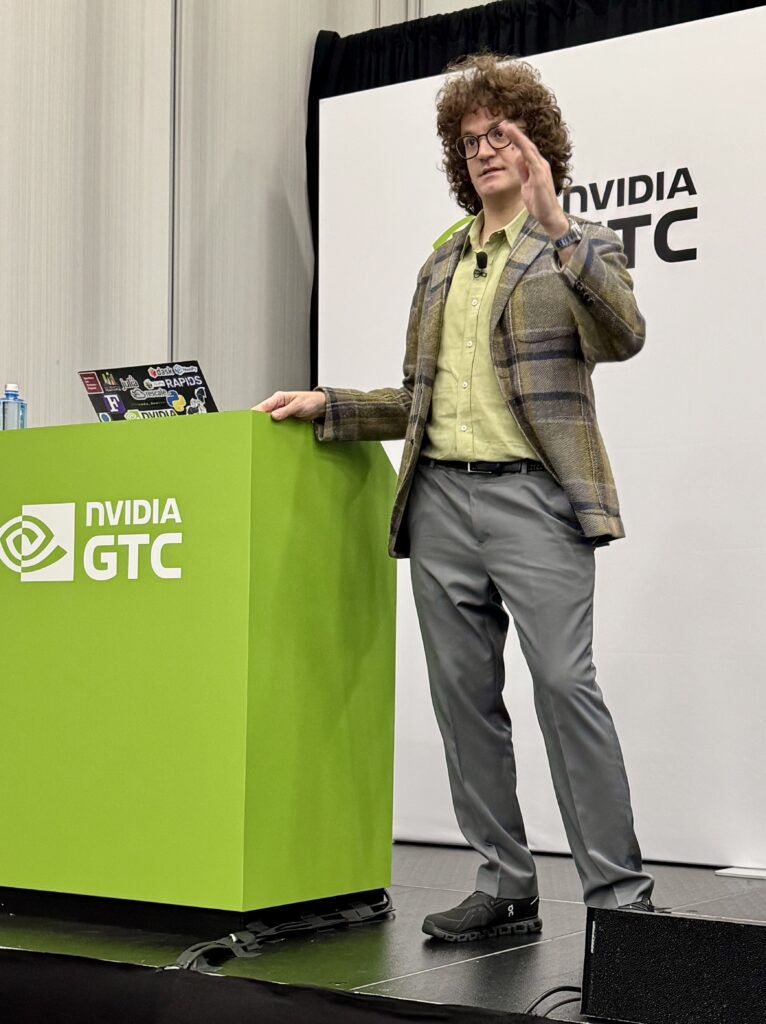
Today, Bryce’s work focuses on programming languages and models. As a Principal Software Engineer at NVIDIA, he designs the programming languages and frameworks other engineers use to write software. He is particularly interested in how artificial intelligence (AI) is causing a new industrial revolution, changing the way people learn, create, and solve problems.
“With the advent of Agentic AI, the entire software engineering ecosystem is undergoing a radical change,” he says. “The way that we work and develop software is completely different now than it was five years ago—and it will be even more different in a couple of years from now. It’s a very interesting time for someone in the field that I’m in.”
As Bryce notes, we’re living in an interesting time for science. He reflects on how science and technology have changed over the last several decades. With scientific exploration increasingly being done on a laptop instead of in a lab, students have more opportunities than ever before to contribute to the fields that interest them.
“I think a lot of the barriers to entry, to being involved and participating in science, are lower than they used to be,” Bryce says. “If you look at the 1970s and the 1980s, if you wanted to make a meaningful contribution to most scientific fields or to technology, you needed access to facilities and equipment that now everybody has access to.”
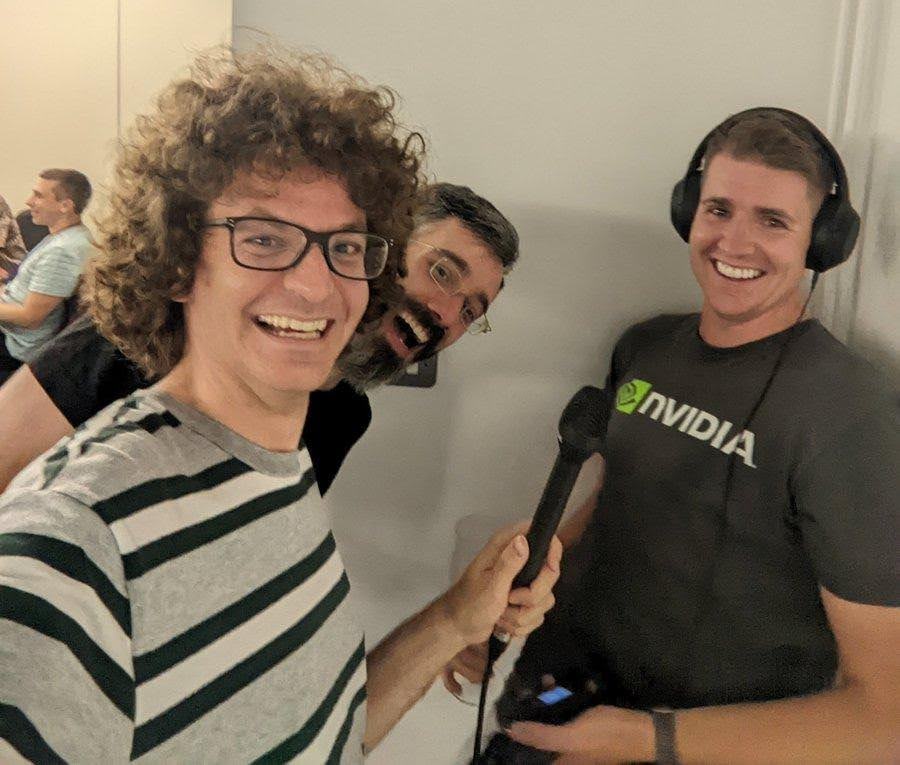
More than twenty years after graduating from Talcott, Bryce still sees curiosity as one of the most valuable skills a student can develop. He encourages current Talcott students to start contributing to the fields that interest them now rather than waiting until they have a degree or job title.
“Don’t wait until the end of your educational career to start contributing to the fields that you think you want to build your career in,” Bryce says. “When you’re a high school student, a college student, or even a student at Talcott, you might be able to meaningfully contribute to the scientific and technology literature out there, to the base of knowledge out there. You’re never too young to start thinking about how you can make a meaningful contribution.”
Congratulations to Bryce Adelstein Lelbach (TMA ’05), recipient of Talcott Mountain Science Center, Academy, & Research Institute’s 2026 Young Alumni Innovator Award. We are proud to celebrate his accomplishments and the impact he continues to make in the world of STEM.