
Extend Your Passion for the Sciences
The TMRI Summer Program is a four-week, immersive research experience for advanced high school students who are eager to engage deeply with questions within STEM disciplines. The program’s design reflects experience evaluating student research at national competitions such as the Regeneron Science Talent Search (STS) and International Science & Engineering Fair (ISEF), helping ensure that students encounter the practices and expectations of authentic scientific inquiry. Structured as a research apprenticeship, the program places students in small groups led by Faculty Research Mentors who are actively engaged in research. Students participate in daily journal club, faculty-led lectures, and sustained research work, while also developing individual research directions within a shared theme. Just as importantly, the Summer Program fosters a strong sense of intellectual belonging—bringing together similarly curious, motivated students and STEM professionals in a community where thoughtful inquiry and collaboration are central.
Registration for the 2026 TMRI Summer Program is now open. Applications are due Friday, April 10, 2026. Learn More.
Students in the TMRI Summer Program should expect to spend each day working closely with a Faculty Research Mentor and a small group of peers on a shared research theme, while also developing an individual line of inquiry. The Program runs full-time for four weeks and requires consistent participation, preparation, and follow-through. Successful students are curious, self-motivated, and willing to engage with challenging material, to ask questions, and to revise their thinking—habits that characterize strong student research projects, including those seen in competitions like Regeneron STS and ISEF. Students who are curious about the Faculty Research Mentors and whether the Summer Program is right for them should view these videos.
Admission is selective and based on readiness for this kind of work rather than prior research experience. Limited financial assistance is available.
ELIGIBILITY
Rising sophomore, junior, or senior high school student in summer 2026
Must be 15 years old by July 6, 2026, and no older than 18 years old by August 1, 2026
Available for the full extent of the four-week Summer Program (July 6-31, 2026)
PROGRAM HIGHLIGHTS
The Summer Program is non-residential, and student participants will come daily to the campus on Talcott Mountain in Avon, Connecticut for initial meetings, enrichment lectures, and activities before moving into their research.
Transportation is available daily between area pick up locations and the Talcott campus and, if appropriate, between the Talcott campus and Faculty Research Mentors’ research labs.
Daily activites on the Talcott campus include STEM lectures and discussions by Faculty Research Mentors, Journal Club for students and their Mentors, lunch discussions, and group individual research.
Weekly activities may include field trips to local museums (e.g. Yale Peabody Museum), visits to regional STEM research facilities (e.g. MIT engineering labs), and social events for the group (e.g. dinner and sciencey movie).
Students conclude the Summer Program by presenting their work in a research symposium, gaining experience communicating scientific ideas in ways similar to those expected of research projects at national and international competitions.
A Snapshot of a Day includes:
8:30 AM- Talcott campus arrival
9:00 AM- Research content lectures/discussions by Mentors
11:30 AM- Journal Club and lunch
12:30 PM- Research, including Mentor meetings
4:30 PM- Talcott campus or Mentor lab departure
COST
Summer Program Tuition – $3,950
Covers Summer Program costs, transportation between TMRI campus and select off-campus locations, field trips, and some meals for special activities
[Optional] Post Summer Program Mentoring – Varies
Covers optional additional mentoring for up to six virtual sessions in period after July 31, 2026, and before November 1, 2026; may be elected any time before July 31 2026; schedule arranged with Faculty Research Mentor
Limited Need-Based Financial Assistance is Available.
We are committed to ensuring that cost does not prevent deeply curious students from applying. Families who wish to be considered for assistance may indicate this in the application.
PROGRAM REQUIREMENTS
Participation in full, four-week, non-residential program July 6-31, 2026.
Complete the online “TMRI Summer Program Prep Course” regarding tools, techniques, and safety for STEM research by July 2, 2026.
Participate in all Summer Program activities, including: (1) on-campus content lectures by Faculty Research Mentors; (2) daily journal club; (3) daily mentored individual research; (4) deliver weekly research updates and final-Friday research presentation; and (5) join all field trip and other Summer Program community activities.
APPLICATION ELEMENTS
All application materials are due Friday, April 10, 2026. Selected students will be notified by mid April.
Complete Summer Program application form
1-2 letters of recommendation, one of which comes from a high school teacher in STEM
High school transcript
Responses to Summer Program writing prompts
2026 Faculty Research Mentors
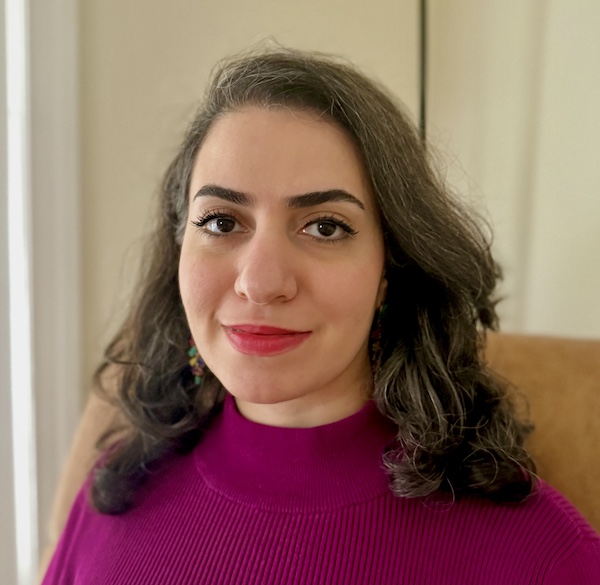
Dr. Solaleh Miar
(Ph.D., University of Texas at San Antonio)
Assistant Professor of Biomedical Engineering, University of Hartford
Hartford, Connecticut
Dr. Miar’s research: “I study advanced biomaterials that help repair tissues and deliver medicines in safer, more effective ways. I also develop small lab-on-chip systems to study how cells behave in different environments. Students can explore how materials interact with cells, how controlled drug release works, or how simple micro-systems mimic real tissues.”
Research question examples from Dr. Miar:
“How can we design smart materials that release medicine only when the body needs it most?”
“Can we build tiny ‘mini-organs’ on a chip to safely test how cells respond to new medical materials?”
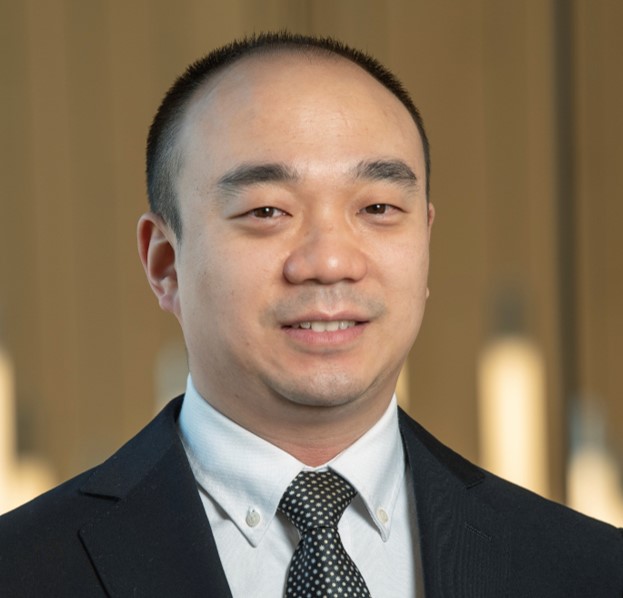
Dr. Xin Shen
(Ph.D., University of Connecticut)
Assistant Professor of Electrical and Computer Engineering, University of Hartford
Hartford, Connecticut
Dr. Shen’s research: “I specialize in 3D imaging, optical sensing, and computational image processing, with applications in augmented reality and intelligent sensing. I mentor student projects involving light-field imaging, 3D optical visualization and display, depth estimation, object recognition, and AI-enhanced 3D visualization for smart systems, and space-related applications.”
Research question examples from Dr. Shen:
“How can we generate true 3D images with the naked eye—without special glasses or headsets?”
“Can computers see and recognize 3D objects in degraded environments such as darkness, occlusion, or visually complex scenes?”
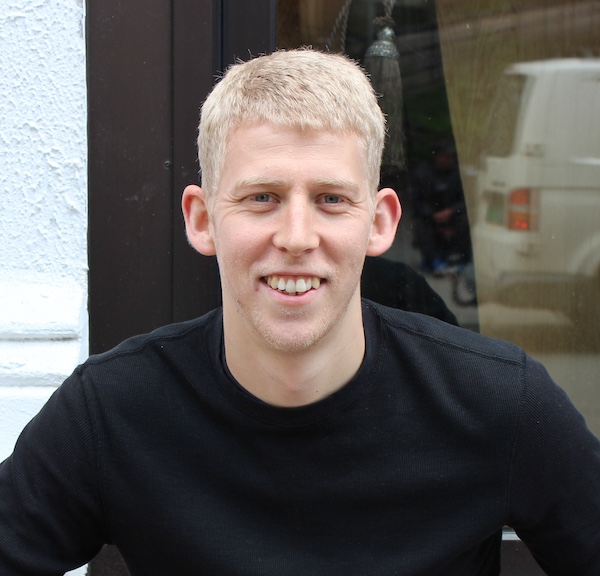
Dr. Per Sebastian Skardal
(Ph.D., University of Colorado at Boulder)
Marjorie V. and Robert W. Butcher
Distinguished Professor of Applied Mathematics, Trinity College
Hartford, Connecticut
Dr. Skardal’s research: “The natural and engineered systems that surround us every day are inherently nonlinear and motivate scientific questions in a wide range of disciplines, ranging from the entrainment of cardiac rhythms to synchronization of power grids. My research uses data-driven and analytical tools to model, understand, forecast, and control these complicated systems.”
Research question examples from Dr. Skardal:
“How do fireflies synchronize their flashing?”
“Why is the weather so hard to predict and how can we improve it?”
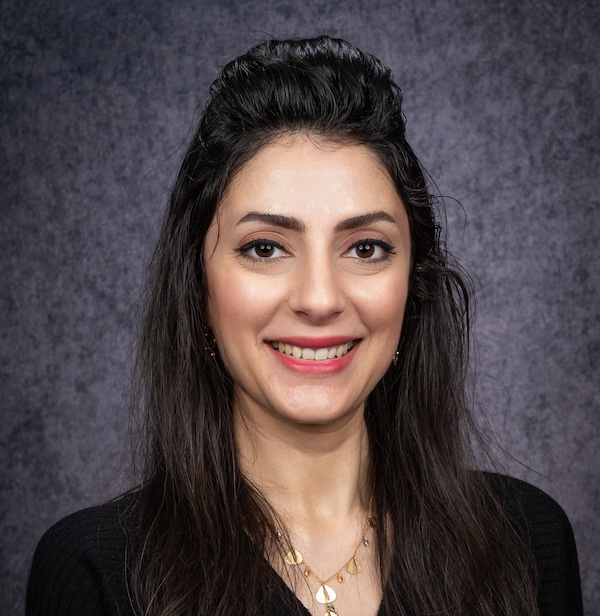
Dr. Olivia Soliman
(Ph.D., Cairo University)
Assistant Professor of Chemistry, University of Hartford
Hartford, Connecticut
Dr. Soliman’s research: “For over 6 years, I have been developing green chemical recycling approaches for plastic waste. My research group theme is Turning TRASH into TREASUREs. My students and I will work on optimizing the chemical reactions to break down waste plastics into their building blocks and will utilize these building blocks in the development of value-added products such as drug formulations and metal organic frameworks (MOFs).”
Research question examples from Dr. Soliman:
“Can we use plastic waste in treating disease?”
“Can we use plastic waste in wastewater treatment?”
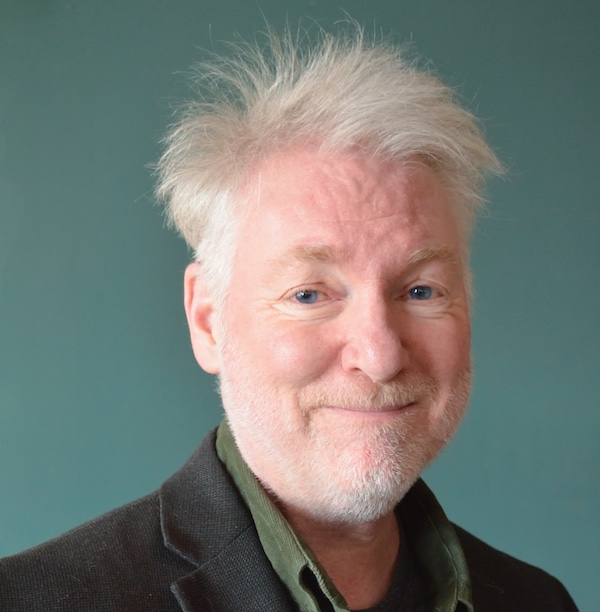
Dr. Michael West
(Ph.D., Yale University)
Astronomer, (formerly) Lowell Observatory
Flagstaff, Arizona
Dr. West’s research: “I am an astronomer who spends his time thinking about cannibal galaxies, whether animals can see the stars, and the size of the biggest objects in the universe. I use the Hubble Space Telescope, supercomputer simulations, and other tools in my research. I also love to explore the space where science and art overlap.”
Research question examples from Dr. West:
“Do whales navigate using the night sky?”
“What happens when galaxies collide at over a million miles per hour?”
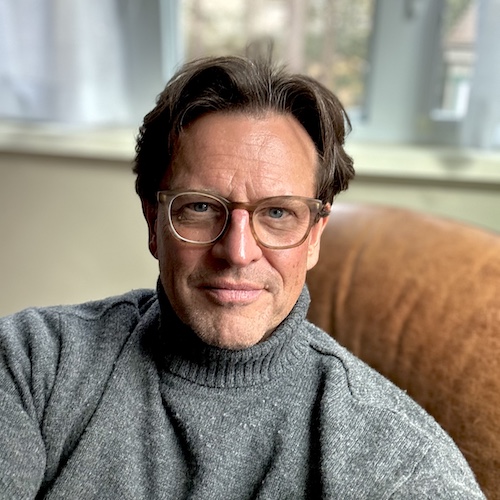
Dr. Jay White
(Ph.D., Indiana University at Bloomington)
Director, Talcott Mountain Research Institute
Avon, Connecticut
Dr. White’s research: “I am drawn to events in space that occur on short, human-loving timescales—things that erupt and/or explode get my attention. My research has always concentrated on stars’ lives, particularly their later stages and especially those that yield novae and supernovae explosions and the situations that produce such cataclysmic outcomes.”
Research question examples from Dr. White:
“Are there black holes that can swallow stars whole?”
“Where cosmically does the iron in our blood originate?”

INSPIRE THE NEXT GENERATION
Faculty Research Mentors
The TMRI high school summer research program utilizes program mentors to work closely with participants. Program mentors should have experience directing research.
Each mentor guides a small group of highly motivated high school students through the research process by providing content lectures, helping students formulate questions, and explore research methodologies and interpret results and present findings.
The application period for the summer 2026 faculty research mentors is now closed.
Contact Jay White by email for more information.